The dobby rapier loom represents a significant advancement in weaving technology, blending the pattern-creating capabilities of a dobby mechanism with the speed and versatility of a rapier weaving system. Its global relevance stems from its ability to efficiently produce a wide range of fabrics, from intricate designs to high-volume plain weaves, impacting industries like apparel, home textiles, and technical fabrics. Understanding the principles and applications of the dobby rapier loom is crucial for textile manufacturers seeking to optimize production, reduce costs, and meet evolving market demands.
The demand for diverse and high-quality textiles continues to grow worldwide, driven by increasing consumer preferences and industrial needs. The dobby rapier loom addresses this demand by offering a balance between complexity and efficiency, enabling manufacturers to create fabrics with sophisticated patterns without sacrificing production speed. This technology plays a pivotal role in maintaining competitiveness in the global textile market and meeting the diverse requirements of modern textile applications.
Furthermore, the continuous innovation in dobby rapier loom technology, including automation and advanced control systems, is reducing operational costs and improving fabric quality. This makes it a vital tool for both established textile businesses and emerging economies striving to develop a robust textile industry. Investing in knowledge and understanding of this technology is crucial for driving sustainable growth and innovation in the textile sector.
Introduction to the dobby rapier loom
The dobby rapier loom is a sophisticated weaving machine widely utilized in the textile industry for producing patterned fabrics. It skillfully merges the capabilities of a dobby mechanism—responsible for creating complex weave structures—with the efficiency and speed of a rapier weaving system. This combination allows for the creation of diverse fabrics with intricate designs, meeting the needs of various applications, from apparel to technical textiles.
Understanding the interplay between the dobby and rapier components is essential to appreciate the loom's functionality. The dobby mechanism, controlled by a punched card or electronic system, lifts specific warp yarns to create the desired pattern. Simultaneously, the rapier system—using carriers to transfer the weft yarn across the warp—ensures rapid and reliable weaving. This synergy results in high-quality fabrics with intricate designs produced at significant speeds.
Defining the dobby rapier loom
A dobby rapier loom is a mechanical weaving device characterized by its ability to produce fabrics with relatively small, repeating patterns. "Dobby" refers to a specific type of attachment that controls the lifting and lowering of warp yarns, enabling the creation of geometric designs, small floral motifs, and other repeating patterns. This distinguishes it from simpler looms that produce only plain weave fabrics and from jacquard looms, which are capable of producing very large and complex designs.
The 'rapier' component of the name signifies the method of weft insertion. Rapier looms use carriers—often resembling swords or rapiers—to transfer the weft yarn (the yarn running horizontally through the warp) across the loom width. The combination provides both pattern versatility and high-speed production, making it ideally suited for a range of textile applications.
In the modern textile industry, the dobby rapier loom bridges the gap between simpler weaving technologies and the more complex jacquard looms. It finds applications in producing fabrics for apparel, home textiles, industrial fabrics, and even specialized materials like ribbons and narrow fabrics. Its adaptability and efficiency make it an indispensable tool for meeting diverse textile manufacturing needs.
Key Components and Operational Principles
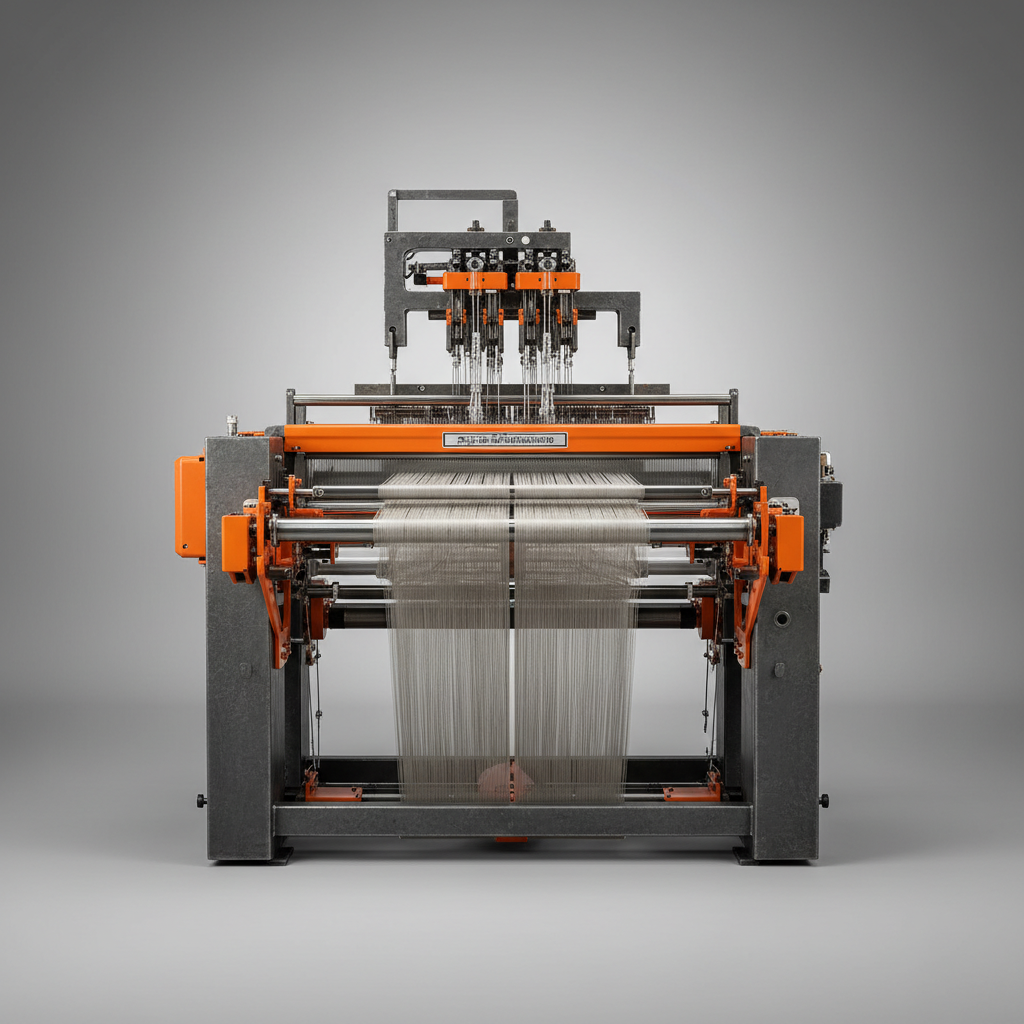
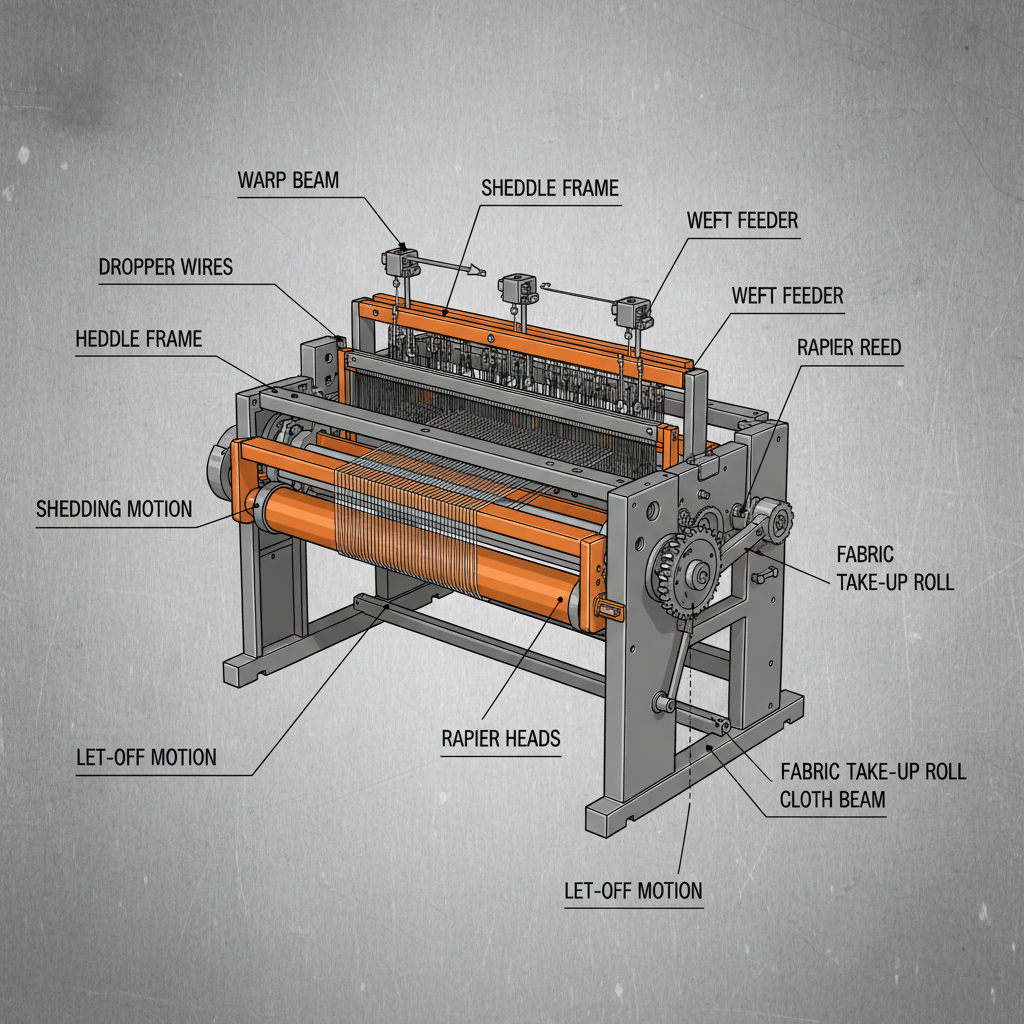
The core components of a dobby rapier loom include the warp beam, the let-off mechanism, the dobby mechanism, the rapier system, the reed, the take-up mechanism, and the cloth beam. The warp beam holds the longitudinal yarns (warp) under tension, while the let-off mechanism controls their release. The dobby mechanism, driven by a pattern chain or electronic controls, selectively lifts warp yarns to create the desired weave structure.
The rapier system utilizes two carriers – a sending rapier and a receiving rapier – to transfer the weft yarn across the shed (the opening created by the raised warp yarns). The sending rapier picks up the weft yarn from a supply source and carries it across the loom, where it is transferred to the receiving rapier, which pulls the weft yarn through the shed. The reed ensures accurate weft insertion, and the take-up mechanism winds the finished fabric onto the cloth beam.
Operational principles revolve around synchronizing the movement of these components. The dobby mechanism creates the shed according to the programmed pattern, the rapier system transfers the weft, and the let-off and take-up mechanisms maintain consistent yarn tension and fabric density. Modern dobby rapier looms often incorporate electronic controls for precise timing and pattern replication.
Performance Characteristics of dobby rapier looms
Dobby rapier looms excel in their ability to balance productivity with design flexibility. Their operational speed is notably higher than that of traditional dobby looms, and while not as fast as air-jet or water-jet looms, they offer a compelling combination of speed and intricate pattern creation capabilities. The versatility regarding yarn types – accommodating cotton, polyester, blends, and even specialized fibers – contributes to their widespread adoption.
The precision of the dobby mechanism and the rapier system also contribute to high fabric quality, minimizing defects and ensuring consistent weave structure. This precision extends to the ability to create fabrics with well-defined patterns and intricate designs. While the complexity of the machine demands skilled operators and regular maintenance, the resulting fabric quality often justifies the investment.
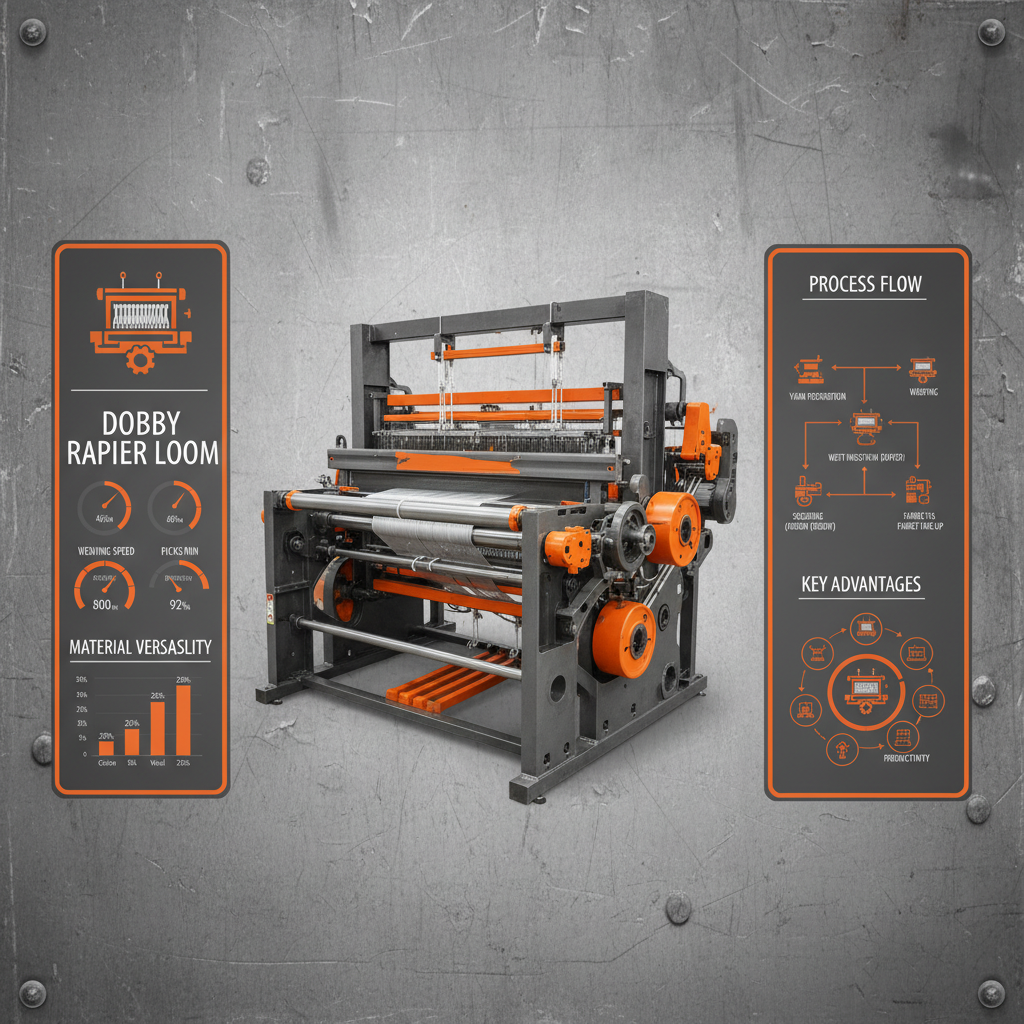
Comparison of dobby rapier loom performance metrics
Global Applications and Industry Impact
The dobby rapier loom's versatility makes it a cornerstone of the textile industry globally. In countries like China, India, and Turkey – major textile production hubs – these looms are used extensively to manufacture fabrics for apparel, home furnishings, and industrial applications. Their ability to produce patterned fabrics efficiently makes them particularly valuable in regions focused on fashion and design.
The impact extends beyond large-scale manufacturing. Dobby rapier looms are also utilized in smaller workshops and specialized textile facilities, where customized fabrics and niche products are created. This adaptability allows for localized production and supports the development of regional textile industries. Furthermore, advancements in automation are increasingly enabling the deployment of these looms in areas with labor shortages.
In remote industrial zones or areas undergoing economic development, dobby rapier looms represent a significant investment in local textile capabilities. By enabling the production of higher-value fabrics, they contribute to economic growth, job creation, and the development of sustainable textile industries. The ability to create unique and marketable fabrics empowers local businesses and strengthens their competitiveness in the global market.
Advantages and Long-Term Value Proposition
The advantages of the dobby rapier loom extend beyond mere fabric production. Cost efficiency is a primary benefit, as the loom's speed and reliability minimize downtime and reduce production costs per unit. This translates to increased profitability for manufacturers. Sustainability is another key advantage; modern dobby rapier looms are designed for energy efficiency and reduced waste, minimizing their environmental impact.
The long-term value proposition rests on the loom’s durability and adaptability. With proper maintenance, a well-built dobby rapier loom can operate for decades, providing a consistent return on investment. The ability to quickly adapt to changing market demands and produce a wide range of fabrics ensures its continued relevance in a dynamic industry. Furthermore, investment in this technology fosters trust and builds a reputation for quality and innovation within the textile supply chain.
Future Trends and Innovations in dobby rapier loom Technology
The future of dobby rapier loom technology is poised for further innovation, driven by advancements in automation, digital control systems, and sustainable materials. Integration with Industry 4.0 principles, including IoT sensors and data analytics, will enable predictive maintenance, optimized production scheduling, and enhanced quality control. The use of artificial intelligence (AI) for pattern design and loom optimization is also gaining traction.
Sustainability will continue to be a major focus, with research directed towards developing energy-efficient looms, utilizing recycled materials, and minimizing water consumption. The adoption of digital weaving techniques and personalized fabric production will also influence the evolution of this technology. Furthermore, advancements in rapier carrier materials and dobby mechanism designs promise to improve speed, precision, and fabric quality.
The development of smart looms capable of self-diagnosis and automated adjustments represents a significant leap forward. These advancements, coupled with the increasing demand for customized and sustainable textiles, will solidify the dobby rapier loom’s position as a vital component of the modern textile industry.
Challenges and Solutions
Despite its many advantages, the dobby rapier loom faces certain challenges. Skilled operator training is crucial for maximizing efficiency and minimizing downtime, but finding and retaining qualified personnel can be difficult. Maintaining precision and preventing mechanical failures requires regular maintenance and timely replacement of worn parts, contributing to ongoing operational costs.
To address these challenges, manufacturers are investing in advanced training programs and remote diagnostic tools. Remote monitoring and predictive maintenance systems allow for proactive identification of potential issues, reducing downtime and extending the loom's lifespan. Furthermore, the development of more user-friendly interfaces and automated troubleshooting features simplifies operation and reduces the reliance on highly specialized skills.
Another challenge lies in adapting to the increasing demand for highly complex and customized designs. While dobby looms excel at repeating patterns, intricate, non-repeating designs may require integration with jacquard technology or innovative programming solutions. Ongoing research focuses on enhancing the dobby mechanism's versatility and expanding its design capabilities.
Summary of dobby rapier loom challenges and corresponding solutions
| Challenge |
Impact on Operations |
Proposed Solution |
Expected Outcome |
| Skilled Operator Shortage |
Reduced efficiency, increased errors |
Comprehensive training programs, intuitive interfaces |
Increased productivity, reduced error rates |
| Maintenance Costs |
High operational expenses, downtime |
Predictive maintenance, remote diagnostics |
Reduced downtime, lower maintenance costs |
| Design Complexity Limitations |
Inability to produce highly intricate designs |
Hybrid systems (dobby + jacquard), advanced programming |
Expanded design capabilities, increased market reach |
| Energy Consumption |
Increased operating costs, environmental impact |
Energy-efficient components, optimized operations |
Reduced energy costs, minimized environmental footprint |
| Raw Material Waste |
Increased production costs, environmental concerns |
Precision control systems, waste reduction strategies |
Lower material costs, improved sustainability |
| Integration with Digital Systems |
Difficulty in data sharing and real-time monitoring |
IoT integration, data analytics platforms |
Improved data visibility, optimized performance |
FAQS
A well-maintained dobby rapier loom can typically operate for 20-30 years or even longer. The lifespan depends heavily on factors like the quality of the machine, the intensity of use, and the regularity of preventative maintenance. Regular lubrication, timely replacement of worn parts, and adherence to manufacturer guidelines are crucial for maximizing longevity.
Dobby rapier looms excel at producing fabrics with small to medium-sized repeating patterns, like shirtings, dress materials, and lightweight upholstery fabrics. They handle a wide range of fibers, including cotton, polyester, blends, and even silk. However, they are less suited for highly complex designs that require the capabilities of a jacquard loom.
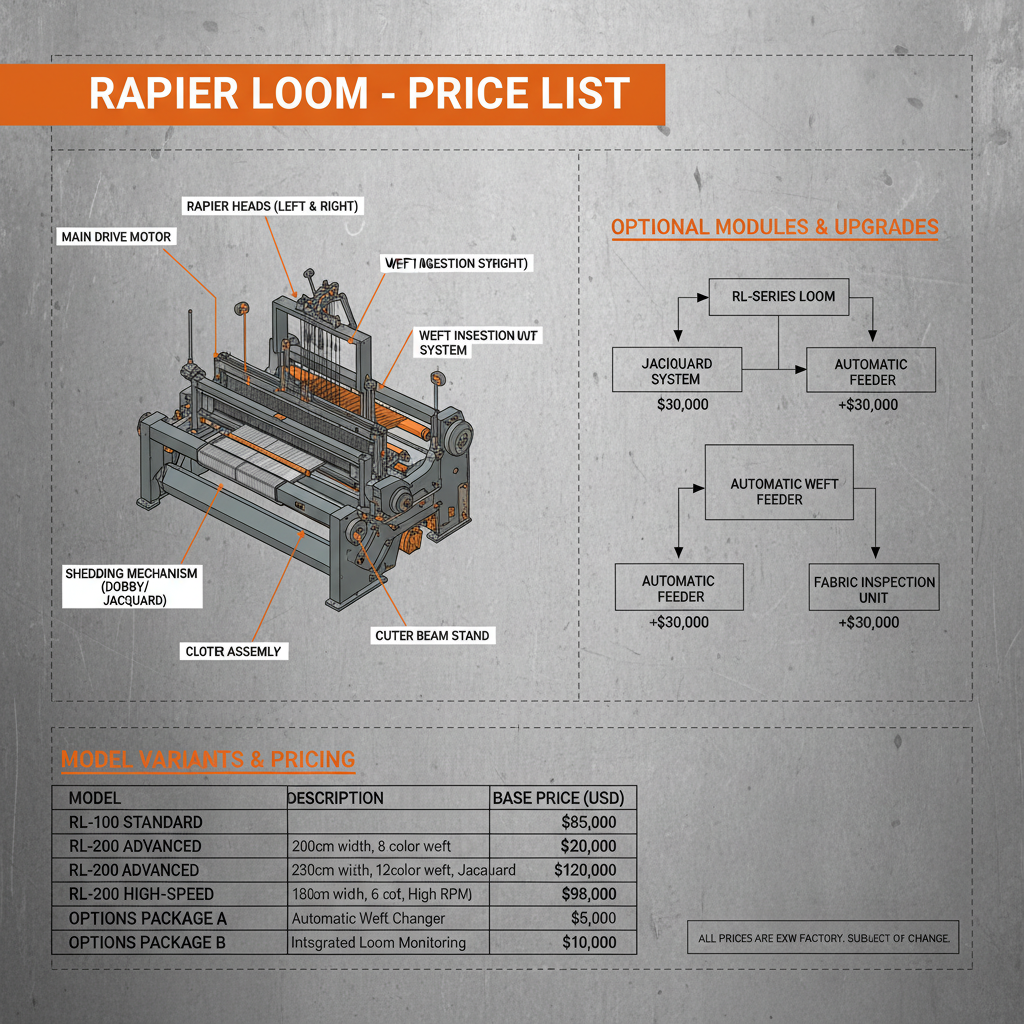
Dobby rapier looms generally represent a moderate investment compared to other weaving technologies. They are typically more expensive than simpler shuttle looms but less costly than air-jet or jacquard looms. The overall cost-effectiveness depends on production volume, fabric complexity, and labor costs. Considering their versatility and durability, they often provide a strong return on investment.
Operating a dobby rapier loom requires a moderate level of technical expertise. While basic operation can be learned relatively quickly, troubleshooting mechanical issues and performing preventative maintenance necessitate specialized training. Skilled technicians are crucial for ensuring optimal performance and minimizing downtime. Ongoing training programs are highly recommended.
Yes, modern dobby rapier looms are increasingly designed with sustainability in mind. Features like energy-efficient motors, optimized yarn guiding systems to reduce waste, and the ability to handle recycled fibers contribute to a reduced environmental footprint. Manufacturers are also focusing on minimizing water consumption and chemical usage in related processes.
Future advancements are likely to include greater automation, integration with Industry 4.0 technologies (like IoT and AI), and the development of smart looms capable of self-diagnosis and optimization. We can also expect advancements in materials science to improve the durability and performance of loom components, as well as improved designs to enhance pattern complexity and flexibility.
Conclusion
The dobby rapier loom stands as a testament to the ongoing evolution of weaving technology. Its ability to combine efficiency, versatility, and cost-effectiveness has made it an indispensable tool for the global textile industry. From producing intricate patterns for fashion apparel to manufacturing durable fabrics for industrial applications, this technology continues to meet the diverse demands of a dynamic market. Understanding the principles, applications, and future trends of the dobby rapier loom is crucial for manufacturers seeking to thrive in a competitive landscape.
Looking ahead, the integration of advanced technologies like AI and IoT will further enhance the capabilities of the dobby rapier loom, enabling greater automation, predictive maintenance, and optimized production processes. Continued focus on sustainability and the development of eco-friendly materials will also play a vital role in shaping the future of this technology. To learn more about how a dobby rapier loom can benefit your textile operations, visit our website: www.hkmeshmachine.com.