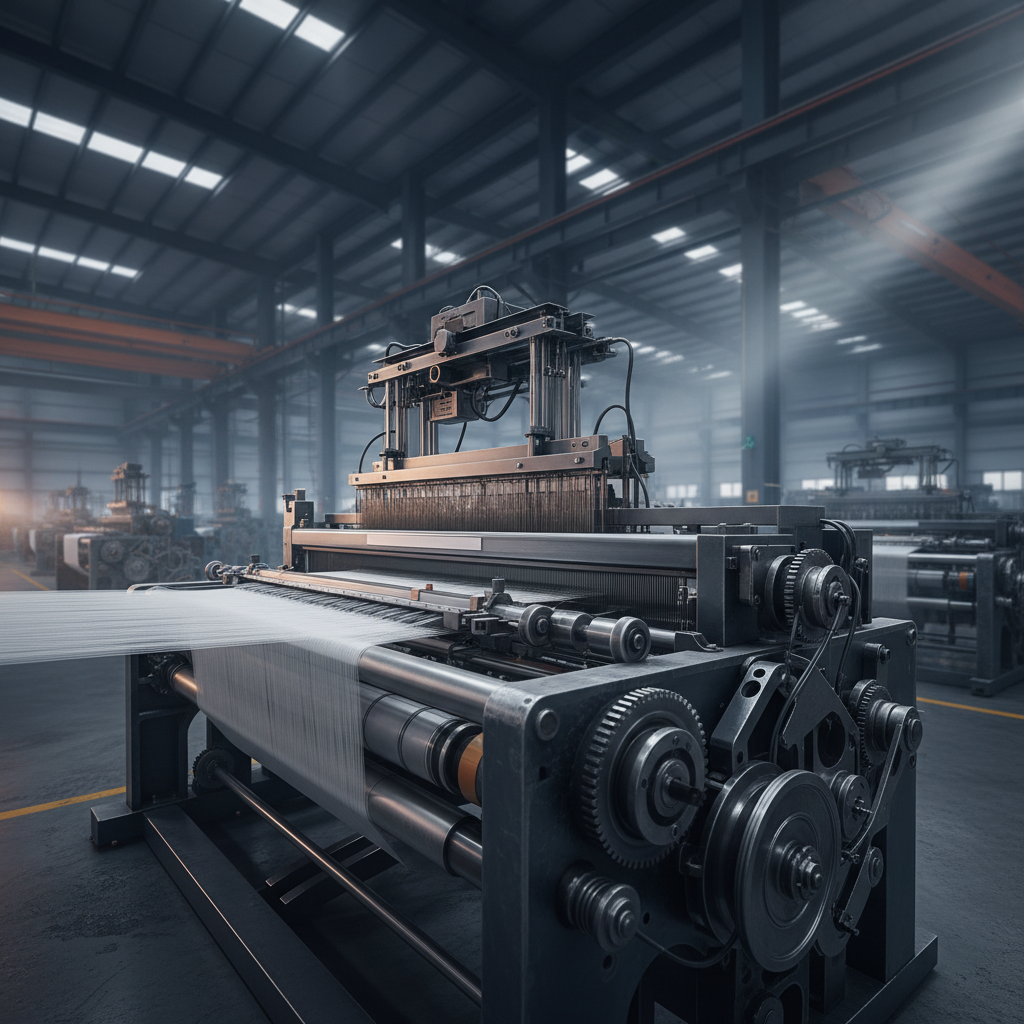


When evaluating the power loom jacquard machine price, most industrial buyers focus on the initial capital expenditure without considering the intricate relationship between automation levels and long-term fabric yield. In the specialized field of wire mesh weaving, the transition from manual pattern setting to electronic jacquard control represents a significant leap in production flexibility, allowing for complex weaves that were previously cost-prohibitive.
The financial investment in these machines is heavily influenced by the intended material application, whether it be for fiberglass fireproof cloth or PE PPE PET window screens. For manufacturers utilizing Fiberglass Machines or Carbon Fiber Machines, the precision of the warp tension and the density of the weft insertion directly correlate to the market value of the finished technical textile, making the machine's technical specifications more critical than the sticker price.
This guide analyzes the variables that drive costs and performance in modern weaving equipment. By examining the technical parameters of high-efficiency looms, we provide a framework for calculating the true ROI of power loom jacquard machine price based on actual production output and technical durability.


Industrial weaving for technical fibers requires a synchronized system of warping and weaving. The process begins with a warping machine, designed to wind glass fiber yarn onto a warp shaft under precise tension requirements. This ensures that during the actual weaving process, the warp tension remains uniform, preventing fabric defects and ensuring a neat arrangement across the loom's width, which can extend up to 2500mm.
The weaving stage transforms these yarns into fire-resistant or reinforced fabrics. Modern machines utilize magnetic powder clutches and electronic control systems to maintain stability at speeds of 135-165 times per minute. By integrating electronic warp sending and winding, manufacturers can achieve a maximum density of 11 weft yarns per centimeter, producing high-efficiency plain and twill fabrics suitable for industrial use.
The valuation of weaving machinery is not merely based on the frame size but on the precision of its control components. High-grade magnetic powder brakes (such as the 63kg variant found in warping units) and Tiger King electric control systems are primary cost drivers because they directly impact the stability of the yarn tension. When tension fluctuates, the resulting mesh surface becomes uneven, leading to higher waste rates in fiberglass and carbon fiber production.
The most critical value driver is the integration of photoelectric protection and infrared stop systems, which reduce downtime by instantly detecting yarn breakage, thereby protecting the 15 KW power systems from unnecessary load and ensuring consistent output quality.
Furthermore, the ability to handle diverse materials—ranging from PE and PPE to PET window screen yarns—requires specific loom adjustments. A machine that supports a wider range of technical parameters, including varied product widths and adjustable winding speeds between 1200 and 1500 meters per hour, commands a higher market price due to its versatility across different product lines.
Implementing high-density weaving allows factories to produce specialized fire-resistant fabrics with superior structural integrity. When a machine can achieve 11 weft yarns per centimeter, the resulting mesh is significantly flatter and more durable. This technical capability is essential for high-end industrial filters and protective clothing, where porosity and strength must be strictly controlled.
The operational value is further realized through the reduction of manual intervention. High automation in the warping and weaving cycle minimizes the risk of human error in tension setting, which is the most common cause of fabric skewing in fiberglass weaving. This leads to a higher percentage of first-pass quality products.
Specialized weaving machines are deployed across various high-tech sectors. In the construction industry, these looms produce fiberglass mesh for wall reinforcement and window screens using PE and PET materials. The high stability of the Hongke control system allows for the production of wide-format meshes (2500mm) that meet international architectural standards for durability and transparency.
In the aerospace and automotive sectors, the focus shifts to Carbon Fiber Machines. These require extreme precision in warp tension to ensure that the woven roving maintains its mechanical properties. The ability to switch between plain and twill weaves allows manufacturers to optimize the fabric for either maximum strength or maximum flexibility depending on the composite part's requirements.
The industry is moving away from traditional shuttle looms toward fully integrated electronic systems. The integration of electronic warp sending and winding has transformed the production line from a series of disconnected steps into a continuous flow. This evolution reduces the labor requirement per machine, allowing a smaller staff of technicians to manage a larger fleet of looms.
Current trends indicate an increasing demand for "smart" weaving systems that can self-diagnose tension irregularities. By utilizing infrared sensors and advanced magnetic clutches, machines can now adjust in real-time to the elasticity of different synthetic yarns, which is critical when weaving high-performance materials like aluminum wire or specialized PET fibers.
Future developments are likely to focus on energy efficiency, reducing the power consumption of the 15 KW warping units while increasing the winding speed beyond 1500 meters per hour. This will enable factories to increase their total output without expanding their physical footprint or increasing energy overhead.
One of the primary challenges in establishing a weaving line is the installation and calibration of the equipment. The complexity of the Hongke control system requires skilled technicians to ensure that the magnetic powder brakes are tuned to the specific yarn weight being used. Improper calibration can lead to uneven tension and frequent machine stops.
Another significant hurdle is the synchronization between the warping and weaving stages. If the warping machine's winding speed and tension do not match the loom's consumption rate, the production line will suffer from intermittent bottlenecks. This necessitates a holistic approach to factory layout and equipment selection, ensuring all models (from 150 Type to 330 Type) are compatible.
To mitigate these risks, professional installation services are essential. Having technicians who can provide on-site setup ensures that the infrared stops and photoelectric protections are correctly aligned, reducing the initial learning curve for the factory operators and accelerating the time-to-market for new mesh products.
| Component | Key Specification | Primary Benefit | Application |
|---|---|---|---|
| Warping Machine | 15 KW / 1500m/h | Uniform Tension | Glass Fiber Yarn |
| Weaving Machine | 135-165 RPM | High Output | Fire-resistant Fabric |
| Control System | Magnetic Powder | Precision Braking | All Mesh Types |
| Product Width | Up to 2500mm | Wide Format | Window Screens |
| Fabric Density | 11 weft/cm | Flat Surface | Twill/Plain Fabrics |
| Safety System | Infrared/Photoelectric | Reduced Waste | Continuous Production |
The price is primarily driven by the level of automation, the quality of the electronic control systems (such as the Tiger King system), and the physical capacity of the machine. Features like magnetic powder clutches, infrared stop sensors, and the ability to handle wide product widths up to 2500mm increase the initial cost but lower the long-term operating expense by reducing waste and increasing speed.
Yes, the weaving machines are designed to produce both plain and twill fabrics with high efficiency. By adjusting the weaving patterns and utilizing the upgraded technology that allows for up to 11 weft yarns per centimeter, manufacturers can achieve a flat mesh surface regardless of the weave type, making them suitable for various technical textile applications.
The warping machine ensures quality by winding yarn onto the warp shaft under strict tension requirements using a magnetic powder brake. This prevents the yarn from loosening or over-stretching, which ensures that when the yarn reaches the loom, it is evenly and neatly arranged. This uniformity is essential for preventing defects in fiberglass and carbon fiber fabrics.
The weaving machines typically operate at speeds between 135 and 165 times per minute, while the accompanying warping machines can achieve winding speeds of 1200 to 1500 meters per hour. These speeds are optimized to balance high output with the stability required for technical fibers like fiberglass and aluminum wire.
Maintenance focuses on the calibration of the magnetic powder clutch and the cleaning of the photoelectric and infrared sensors. Because these components are critical for tension control and automatic stops, regular checks ensure that the machine does not produce skewed fabric and that the safety systems respond instantly to yarn breakage.
These machines are specifically engineered for technical fibers including fiberglass, carbon fiber, and polymers like PE, PPE, and PET. They are ideal for producing window screen mesh, fireproof cloth, and woven roving, where high tensile strength and precise density are required for industrial performance.
Selecting a weaving system based solely on the initial power loom jacquard machine price often overlooks the critical impact of technical specifications on production yield. The integration of precise warping tension, high-density weaving capabilities, and automated safety systems is what ultimately determines the profitability of a technical textile plant. By prioritizing stability and automation, manufacturers can ensure a consistent product quality that meets the rigorous demands of the fiberglass and carbon fiber industries.
For enterprises seeking to optimize their production lines with professional wire mesh machinery, understanding the balance between machine capacity and material requirements is key. We invite you to explore the full range of weaving solutions at www.hkmeshmachine.com to find the equipment that aligns with your specific technical goals and production volume.