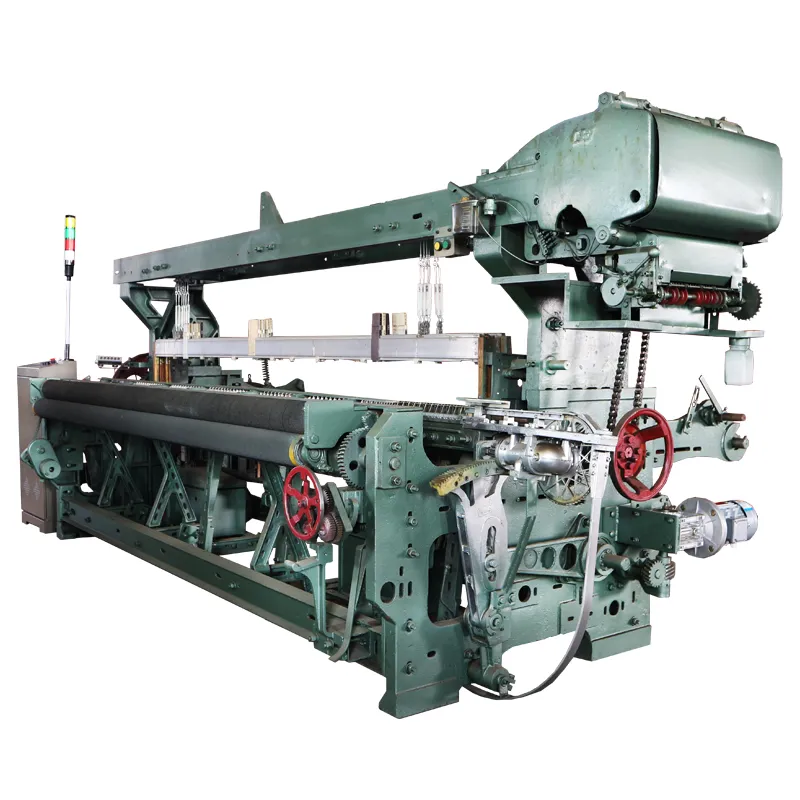



Industrial Weaving Equipment and Jacquard Machine Price Guide
Navigating the procurement of industrial weaving equipment requires a deep understanding of how mechanical precision translates into fabric quality. For operators focusing on high-density materials like denim, canvas, or specialized industrial meshes, the choice of weaving system is the primary driver of long-term ROI. Modern cam-driven systems and sword rod transmission technologies have revolutionized the way complex patterns are executed, offering a balance between structural rigidity and operational speed.
When evaluating a jacquard machine price, professionals must look beyond the initial capital expenditure and analyze the total cost of ownership, including maintenance requirements, energy efficiency, and the machine's ability to handle diverse materials from fiberglass to aluminum wire. By integrating automated controls and precise beating forces, manufacturers can significantly reduce labor costs while increasing the output of high-strength, wear-resistant textiles.

Advanced Cam-Driven Weaving Systems for High-Density Industrial Fabrics
The core of high-performance weaving lies in the precision of the beating force. A cam-driven system is specifically engineered to control the movement of the reed seat with extreme accuracy. This ensures that every pass of the weft yarn is beaten into the fabric with consistent force, which is critical for producing high-density materials such as heavy-duty canvas and industrial-grade denim. Without this stability, fabrics often suffer from uneven density, leading to structural weaknesses.
From an engineering perspective, the mechanical structure of these machines is designed for maximum rigidity. This prevents deformation during long-term, high-speed operation, which is a common failure point in lower-end equipment. By minimizing vibration and mechanical drift, these systems not only enhance the quality of the woven product but also significantly lower the frequency of required maintenance, ensuring that production lines remain active with minimal downtime.
- Stable Trajectory: Ensures uniform fabric structure across the entire width.
- Rigid Construction: Reduces wear and tear during continuous heavy-duty cycles.
- Low Maintenance: Simplified mechanical linkages reduce the cost of spare parts.

Precision Weft Insertion via Sword Rod Transmission Technology
Efficient weft insertion is the bottleneck of weaving speed. Sword rod transmission utilizes either rigid or flexible rods to hold and pass the weft yarn accurately through the shuttle opening. This technology is particularly advantageous for producers who require alternating multi-color weft yarns, as it provides the necessary control to switch colors without compromising the speed of the loom.
One of the standout features of this technology is its wide adaptability. These machines can be configured to handle fabric widths ranging from 2 to 5 meters, making them ideal for large-scale industrial fabrics and decorative textiles. The integration of automatic controls, including warp and weft stop motions, ensures that the machine halts immediately upon yarn breakage, preventing costly defects in large fabric rolls.
The operational flow—from high school opening to sword-post insertion, followed by cam beating and final roll-up—is optimized for automation. This streamlined process allows a single operator to manage multiple devices simultaneously, drastically reducing labor overhead while maintaining rigorous quality standards.
Operational Efficiency and Product Quality in Wire Mesh Manufacturing
For manufacturers specializing in fiberglass and aluminum mesh, the priority is achieving a balance between high production speed and yarn tension control. High-speed weaving machines equipped with N-color automatic conversion devices allow for complex pattern weaving via computer control, removing the manual limitations of traditional looms. This versatility allows a factory to switch between different product specifications, such as window screens or fireproof cloth, with minimal reconfiguration.
The resulting fabrics are characterized by high strength and low elongation. Because the weaving process is scientifically controlled, the yarn tension remains uniform, which is essential for the durability and wear resistance of industrial screens. Whether producing PE, PPE, or PET window screens, the ability to adjust the weaving width in real-time ensures that the equipment can meet various client specifications without requiring a new machine for every size.
Investment in such automation not only shortens the production cycle but also guarantees that the final product meets international standards for industrial textiles, providing a competitive edge in export markets such as Egypt, Turkey, and Saudi Arabia.
Technical Evaluation of Weaving System Configurations
| Feature Component | Cam-Driven System | Sword Rod Insertion | Impact on Production |
|---|---|---|---|
| Beating Force | Precise/Consistent | N/A | High-density fabric stability |
| Weft Versatility | N/A | Multi-color support | Complex pattern capability |
| Max Width | Standard | Up to 5 Meters | Suitable for industrial rolls |
| Control Level | Mechanical Rigidity | Automatic Stop/Train | Reduced material waste |
| Maintenance | Low frequency | Moderate | Higher machine uptime |
Strategic Considerations for Procurement and Supplier Selection
When sourcing weaving equipment, the technical capability of the manufacturer is as important as the machine specifications. A supplier's ability to provide on-site installation and training is critical, especially for complex automated systems. For instance, having technicians with international travel readiness ensures that the machinery is commissioned correctly and that the local staff is trained to maximize the equipment's efficiency from day one.
Buyers should evaluate the supplier's track record in diverse markets. Experience in exporting to regions with varying industrial standards—such as Russia, India, and Romania—indicates a manufacturer's ability to adapt their machinery to different power grids, climatic conditions, and material availability. This global experience often translates into more robust machine designs and better after-sales support.
Furthermore, the capacity for customization should be a key metric. The ability to modify weaving widths or integrate specific automatic conversion devices allows a business to scale its product line without replacing its entire asset base. A professional manufacturer will focus on "Technical Innovation and Quality Products," ensuring the equipment evolves with the industry's needs.
Future Trends in Industrial Weaving Automation
The industry is moving toward full digitalization, where computer-controlled pattern weaving is becoming the standard. The integration of N-color automatic conversion allows for rapid prototyping of decorative and industrial fabrics, significantly reducing the time-to-market for new product designs. We are seeing a shift toward machines that can handle a wider array of synthetic fibers, including high-performance polymers for fireproof applications.
Sustainability is also driving innovation. Modern machines are being designed to reduce energy consumption per meter of fabric produced and to minimize yarn waste through more precise automatic stop motions. As labor costs rise globally, the demand for "one-person, multiple-machine" operational models will increase, pushing manufacturers to further enhance the human-machine interface (HMI) for easier operation.
For businesses looking to expand, investing in versatile equipment that supports both traditional shuttle loom functions and modern automated insertion will provide the flexibility needed to navigate fluctuating market demands in the wire mesh and textile sectors.
Frequently Asked Questions on Industrial Weaving Equipment
What is the primary advantage of a cam-driven weaving system?
A cam-driven system provides precise control over the reed seat's movement, ensuring a consistent beating force. This is essential for producing high-density fabrics like canvas or denim, where uniform density and a stable trajectory are required for structural integrity.
Can sword rod transmission handle different types of yarns?
Yes, sword rod transmission is highly versatile. It can hold both rigid and flexible yarns and is particularly effective for alternating multi-color weft yarns, allowing for the creation of complex patterns in industrial and decorative fabrics.
What is the maximum fabric width these machines can produce?
Depending on the specific configuration, these machines can handle fabric widths from 2 meters up to 5 meters, making them suitable for large-scale industrial applications.
How does automation reduce operational costs in weaving?
Automation features such as automatic warp/weft stops and computer-controlled color conversion allow a single operator to manage multiple machines. This reduces labor costs and minimizes material waste caused by undetected yarn breakages.
What should I look for in a machinery supplier's service?
Look for suppliers who provide comprehensive installation support. For example, having technicians capable of traveling to your factory ensures the machinery is set up correctly and your staff is fully trained on operation and maintenance.
Are these machines suitable for fiberglass and aluminum wire?
Yes, they are specifically designed for the wire mesh industry, including the production of fiberglass window screens, fireproof cloth, and aluminum wire weaving, ensuring high strength and durability.
Technical References and Industry Standards
- Textile World - Industrial Weaving Technology Trends
- ISO Standards for Industrial Textiles and Mesh
- ITMA - International Machinery Textiles and Apparel
- Fiberglass Industry Technical Specifications
Selecting the right weaving equipment is a strategic decision that impacts production quality and operational costs for years. By focusing on mechanical rigidity, automated precision, and supplier expertise, manufacturers can ensure a sustainable and scalable production line.
Related Industry Insights