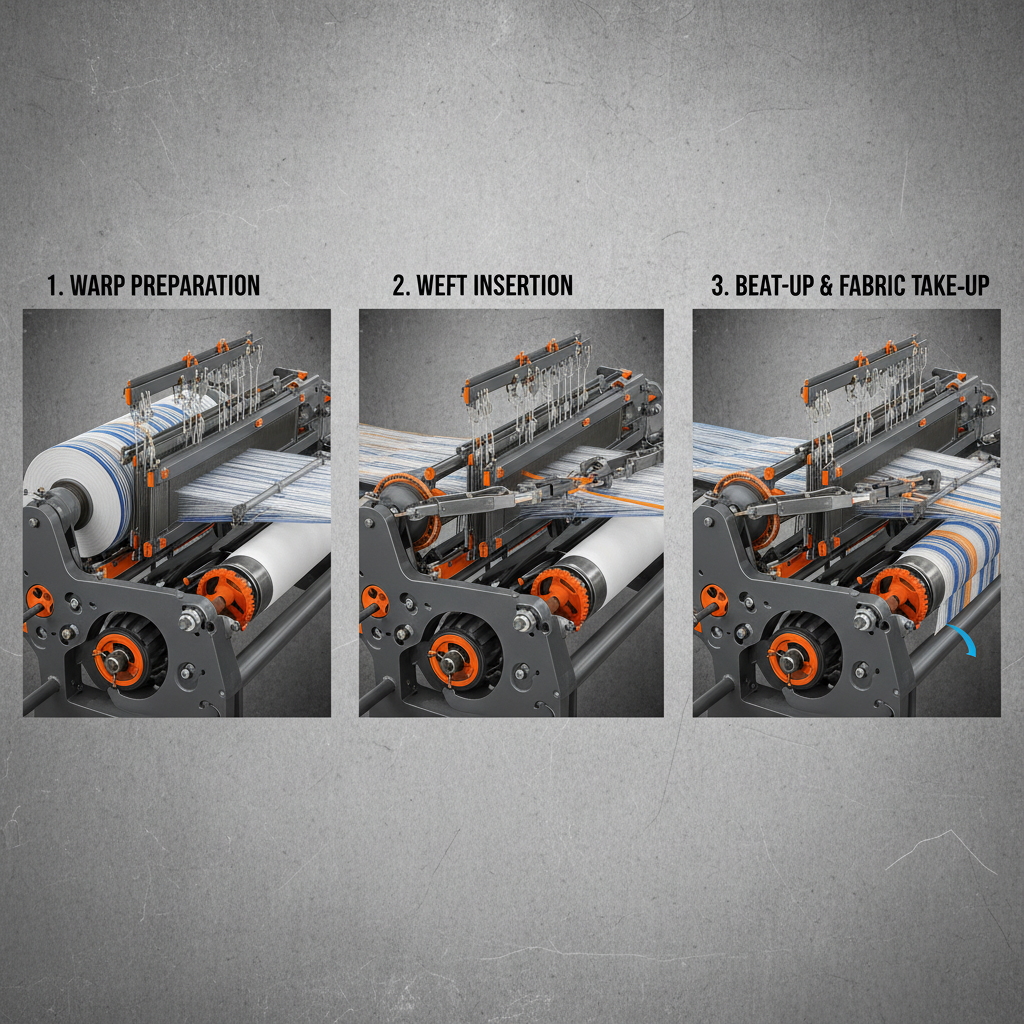



Selecting the right equipment for specialized textile production often comes down to finding reliable jacquard machine manufacturers who understand the intersection of precision weaving and material durability. For those operating in the industrial mesh sector, the ability to control complex patterns and maintain structural integrity is not just a preference but a technical necessity.
Whether you are producing carbon fiber reinforcements, fiberglass fireproof cloth, or high-transparency window screens, the machinery you choose dictates your output quality and operational overhead. The transition from basic weaving to advanced jacquard-style control allows for greater density and design flexibility, which is critical in high-performance industrial fabrics.
This guide examines the technical requirements of specialized weaving machinery, the evaluation metrics for choosing a manufacturer, and how integrated production lines—from warping to weaving—impact the total cost of ownership and final product consistency.

Understanding the Technical Scope of Industrial Weaving Machinery

Industrial weaving is far more than a repetitive mechanical process; it is a calculated coordination of tension and timing. In the context of specialized equipment, the focus shifts from sheer volume to the ability to handle difficult materials like fiberglass, carbon fiber, and various polymers (PE, PPE, PET).
A complete production cycle begins with the warping machine, which is essential for winding yarn onto a warp shaft with precise tension. Without uniform tension, the subsequent weaving process often suffers from defects, uneven mesh surfaces, or structural failures in the fire-resistant cloth. Modern systems now utilize magnetic powder brakes and photoelectric protection to ensure these parameters remain constant across widths up to 2500mm.
The weaving stage then converts these yarns into the final product. The evolution of these machines has enabled higher densities—reaching up to 11 weft yarns per centimeter—allowing manufacturers to produce both plain and twill fabrics that meet rigorous industrial standards for air filtration, reinforcement, and protection.
Core Performance Indicators for High-Efficiency Mesh Production
When evaluating machinery, professional buyers prioritize stability and automation over nominal speed. A machine that runs at 165 picks per minute but requires frequent stops for tension adjustment is less productive than a slower, more stable system.
Key technical parameters include the use of magnetic powder clutches for smooth engagement and high-grade electric control systems (such as Tiger King) that minimize mechanical shock. These components reduce wear on the yarns, which is particularly critical when working with abrasive materials like fiberglass.
Furthermore, the integration of infrared stops and automatic control systems allows for reduced labor costs and minimizes human error during the winding and weaving phases, ensuring that every meter of the mesh surface remains flat and consistent.
Practical Applications Across Specialized Industrial Fabric Sectors
The versatility of modern weaving machinery allows a single factory to pivot between various high-value products. For instance, fiberglass fireproof cloth requires a dense, tight weave to prevent heat penetration, whereas window screens prioritize transparency and aperture uniformity.
In the carbon fiber sector, the machinery must handle high-modulus yarns without causing fraying. This requires specific warp tension controls and weaving mechanisms that can maintain a high production efficiency without compromising the fiber's structural properties.
Other critical applications include the production of PE, PPE, and PET mesh used in agricultural and industrial filtering. The ability to switch between plain and twill weaves allows manufacturers to offer products with different strength-to-weight ratios, catering to diverse client needs in Egypt, Turkey, India, and beyond.
Comparative Analysis of Production Throughput and Density
Quantifying the impact of upgraded machinery involves looking at the relationship between weaving speed, weft density, and the resulting waste percentage. Higher density fabrics typically require slower speeds to maintain quality, creating a trade-off that must be managed.
By implementing electronic warp sending and winding, manufacturers can achieve a more consistent output. The following data illustrates the performance shift when moving from standard shuttle looms to advanced specialized weaving systems optimized for industrial mesh.
jacquard machine manufacturers Performance Metrics
The data indicates that while peak speed may vary, the overall stability and the ability to maintain a flat mesh surface are significantly higher in specialized systems. This leads to a reduction in rejected rolls and an increase in the usable yield per production cycle.
Strategic Procurement Considerations for Weaving Equipment
Purchasing industrial machinery is a long-term capital investment. The primary risk is not the initial price, but the cost of downtime and the difficulty of installation. Many factories overlook the necessity of on-site technical support during the commissioning phase.
When evaluating a vendor, verify their export experience to your specific region. Logistics and customs requirements vary significantly between markets like Saudi Arabia and Romania. A manufacturer that has already successfully exported to these regions is more likely to provide compatible electrical specifications and reliable shipping.
Additionally, consider the modularity of the equipment. Being able to select between electronic warp sending and traditional winding allows you to scale your capabilities as your product portfolio expands from simple window screens to complex woven roving.
Future Trajectories in Automated Mesh Weaving Technology
The industry is likely to move toward even higher levels of integration between the warping and weaving stages. We are seeing a shift where real-time tension monitoring can automatically adjust the weaving speed to prevent yarn breakage in carbon fiber production.
The demand for "smart" fabrics—those with embedded sensors or specific conductive properties—may require machinery that can handle hybrid yarn types. This will place more pressure on manufacturers to develop more flexible jacquard-style controls that can handle varying yarn diameters and textures on the same loom.
Sustainability is also becoming a driver. New machinery is expected to focus on energy efficiency and the reduction of raw material waste through more precise cutting and winding algorithms, potentially lowering the carbon footprint of the fiberglass production process.
Evaluation Framework for Selecting the Right Equipment Partner
To make an objective decision, procurement teams should use a weighted matrix that compares technical specifications against service capabilities. A machine with the highest speed is useless if the manufacturer cannot provide a technician for installation.
The following table provides a framework for comparing different equipment configurations based on the intended end-product and the required operational scale.
| Equipment Configuration | Primary Material | Key Performance Driver | Ideal Application |
|---|---|---|---|
| Standard Weaving Line | Fiberglass Yarn | Stable Warp Tension | Window Screen Mesh |
| High-Density Setup | Fire-resistant Yarn | Weft Density (11/cm) | Industrial Fire Cloth |
| Precision Carbon Line | Carbon Fiber | Low-Friction Handling | Aerospace Reinforcement |
| Polymer-Optimized | PE/PPE/PET | High-Speed Output | Agricultural Screening |
| Heavy-Duty Looms | Aluminum/Metal Wire | Mechanical Torque | Industrial Wire Mesh |
| Hybrid Custom Line | Mixed Synthetic | Control System Flexibility | Custom Technical Textiles |
Ultimately, the choice should depend on your long-term product roadmap. If your goal is to expand into high-performance composites, investing in machinery with superior tension control and high-end electric systems is a prerequisite for success.
Frequently Asked Questions
Conclusion
Establishing a high-efficiency production line for industrial mesh requires more than just purchasing a machine; it requires a strategic partnership with a manufacturer that understands the technical nuances of specialized fibers. From the initial warping stage to the final weave, every parameter—from magnetic powder clutch engagement to weft density—contributes to the final product's marketability.
For businesses evaluating their equipment needs or seeking to upgrade their production capabilities in the fiberglass, carbon fiber, or polymer mesh sectors, detailed technical specifications and service reliability are the most critical metrics. Readers interested in exploring specific machinery configurations can review the relevant product and company information available through www.hkmeshmachine.com.